

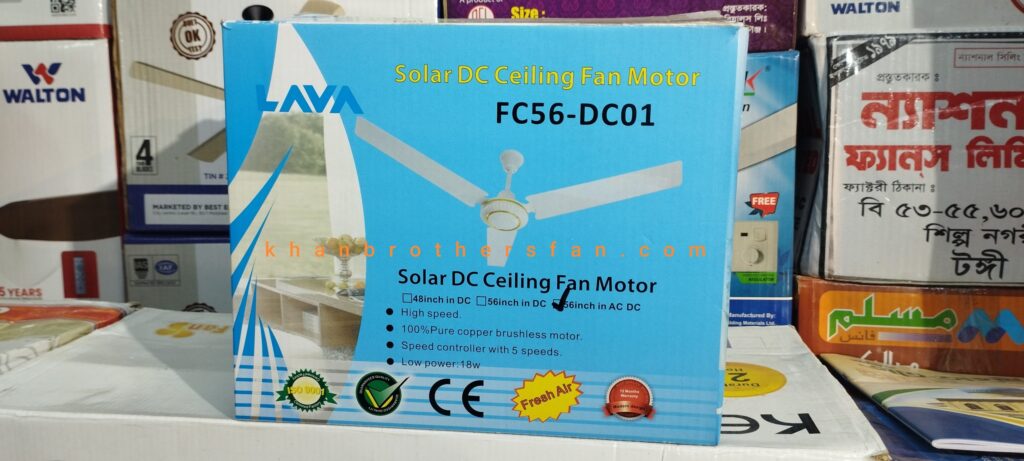
Choosing between an AC/DC ceiling fan and a DC-only solar fan depends on how you plan to power it. This guide compares the two LAVA 56-inch models listed by Master Solar BD: the LAVA AC/DC Solar Ceiling Fan and the LAVA 12V DC Solar Ceiling Fan.
At a glance: AC/DC vs DC-only
| Feature | LAVA AC/DC model | LAVA DC-only model |
|---|---|---|
| Input type | 12V DC and 220V AC (as listed) | 12V DC (as listed) |
| Power-source flexibility | Can suit compatible DC or mains AC installations | Designed for a compatible DC system |
| Best fit | Homes needing both DC and AC options | Dedicated 12V DC solar/battery setups |
| What to verify | 20W low-voltage / 40W high-voltage mode | 20W low mode / up to 40W high mode; confirm controller compatibility |
1. When should you choose the AC/DC fan?
The AC/DC model is useful when you want flexibility between a compatible 12V DC source and 220V AC mains. The confirmed LAVA AC/DC model consumes 20W in low-voltage mode and 40W in high-voltage mode. Compare energy use using the mode you actually operate; for AC operation through an inverter, include conversion losses and standby draw.
View the LAVA 56-inch AC/DC fan and current listing.
2. When should you choose the DC-only fan?
A DC-only fan can be a practical choice where the electrical system is already designed around the fan’s specified DC voltage. It avoids using an inverter to produce AC for the fan, provided the DC supply is correctly regulated and compatible. The confirmed DC-only model power use is 20W in low mode and up to 40W in high mode. Use 20W or 40W according to the speed selected when estimating battery and solar requirements. Check the fan label and compatible controller specifications before installation.
View the LAVA 56-inch DC solar fan.
3. Which one uses less electricity?
Do not assume that DC-only always uses less power than AC/DC. Compare measured input watts at the same fan speed and similar airflow. For AC operation through an inverter, account for inverter conversion losses and standby draw. Estimate your daily units with the Solar Fan Electricity Consumption Calculator.
4. Battery and solar-panel sizing
Battery capacity depends on fan watts, operating hours, battery voltage, usable depth of discharge and system efficiency. Use the Solar Fan Battery Backup Calculator for a first estimate. Panel size must also account for local peak-sun-hours, weather, shading, controller losses and whether the fan runs while the sun is available or from stored energy at night.
Final recommendation
Choose the AC/DC model if you value the option of both compatible 12V DC and 220V AC operation. Choose the DC-only model for a dedicated 12V DC setup after confirming its exact electrical rating. For complete panel, battery and wiring guidance, read How to Run a Ceiling Fan on Solar Power. Always follow the fan manufacturer’s wiring instructions; never connect a 12V fan to a higher-voltage battery bank.
Related LAVA guides and packages
For a complete overview, visit the LAVA Solar Fan Guide. If you are choosing a rechargeable package, compare the 6Ah and 15Ah LiFePO4 battery options. Before wiring a solar setup, read the LAVA solar connection safety guide.